Published: November 11, 2025
You’ve poured your heart into writing a children’s story. You can envision the characters, the colors, the magic that will leap off each page. But there’s one crucial piece missing: the illustrations that will bring your words to life.
Especially for many first-time children’s book authors, finding and working with the right illustrator feels like navigating uncharted territory. How do you choose the right artist? What should you prepare before you start? And perhaps most pressing: What will it cost?
We sat down with award-winning illustrators Chantelle and Burgen Thorne to demystify the process and help you create a picture book you’ll be proud of.
Interested in working with Chantelle and Burgen Thorne?
We created an exclusive offer in partnership with these incredible illustrators. Check our premium children’s book package: illustrations, editing, book design, and publishing in one.
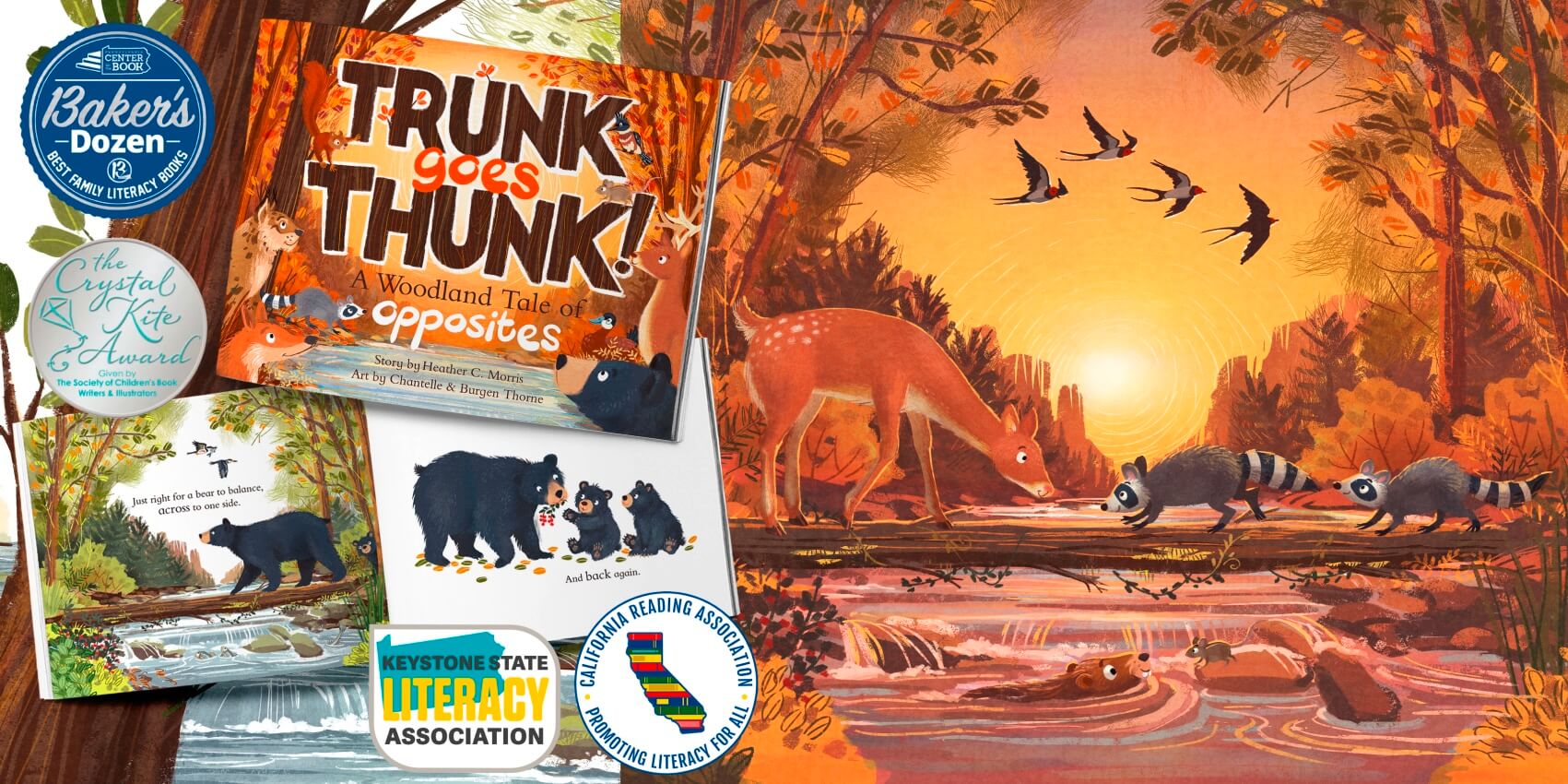
Finding Your Perfect Match: It’s About Style, Not Subject Matter
The biggest mistake authors make? Choosing an illustrator based on whether they’ve drawn your exact subject before.
“Make your choice based on style rather than content,” Chantelle and Burgen Thorne advise. “Most artists are competent at representing a variety of subjects and environments, so if you don’t see an example of exactly what you’re looking for in an artist’s portfolio (a rainforest, for example) but you love how they’ve handled plants in an urban setting, they might still be a good fit.”
Picture book illustrators come in many flavors—some specialize in whimsical watercolors, others in bold graphic designs, and still others in detailed realism. The key is finding an illustrator whose aesthetic matches your story’s emotional tone. If your tale is playful and lighthearted, a dark, moody illustrator might not be the right choice, no matter how talented they are.
Don’t be afraid to reach out with questions if you’re uncertain about a potential match.
The Critical First Step: Understanding the Project Scope and Book Specifications
Here’s something that catches many authors off guard: Your illustrator needs specific technical information before they can even begin sketching.
Size matters—a lot. Before your illustrator draws a single line, they need to know:
- The exact trim size of your book and whether pages will be in landscape or portrait orientation.
- The specifications for both content pages and the cover. Will you want floating spot images that can be arranged anywhere on the page, or full bleed or even full spread images instead of single page images? Will you be publishing a hardcover format AND a paperback version of your book? Cover artwork specs differ for both.
- Where you envision scene or page breaks, and how much room for text should be left on each page.
This isn’t just a technicality. “The illustrator needs to know the size of the content pages and cover BEFORE beginning ANY of the design and illustration work,” Chantelle and Burgen emphasize. “They need to understand the format of the pages to think about the composition, and to make sure it scales up in the correct proportions from small compositional thumbnails to full-size sketches.”

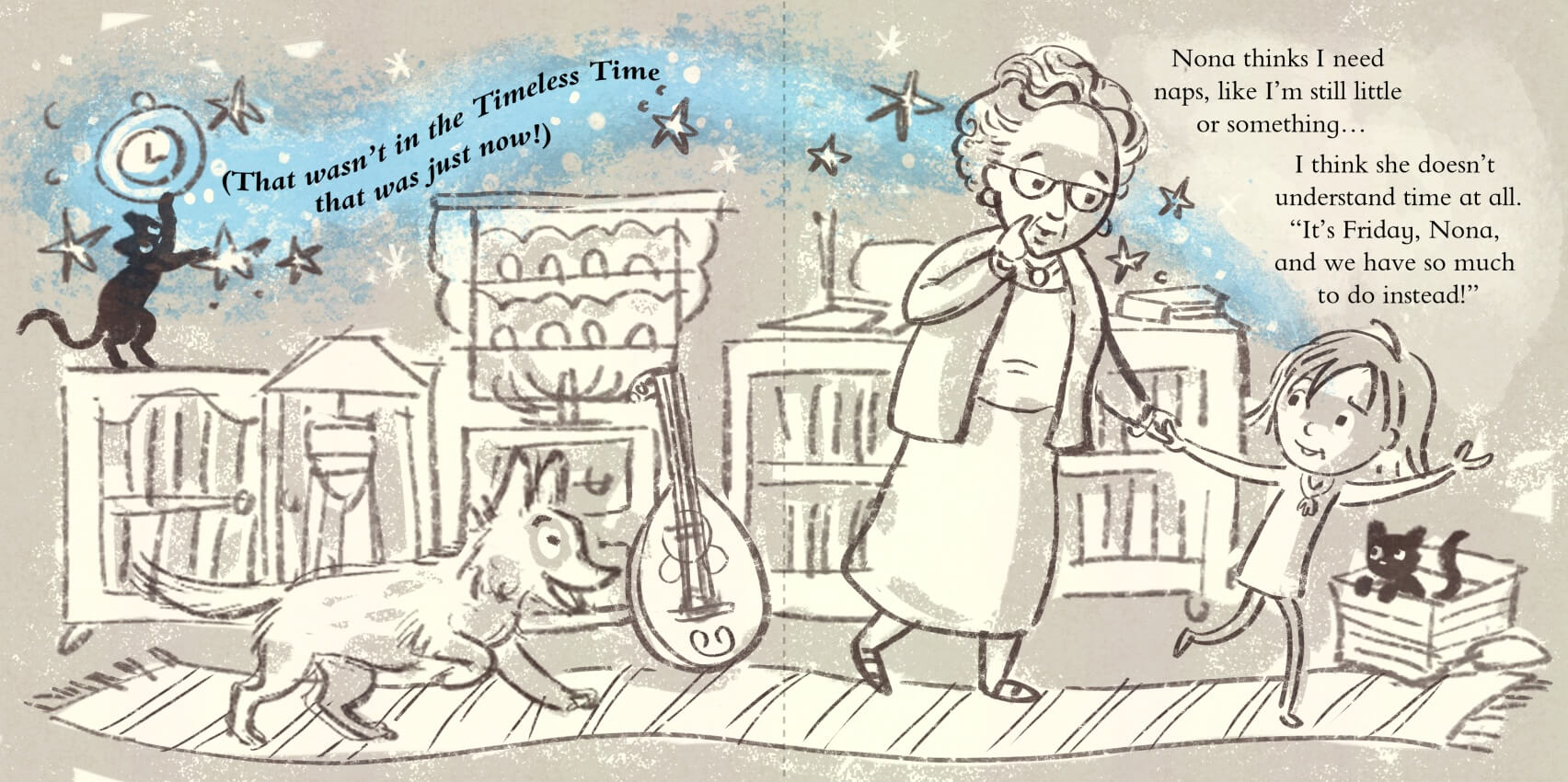
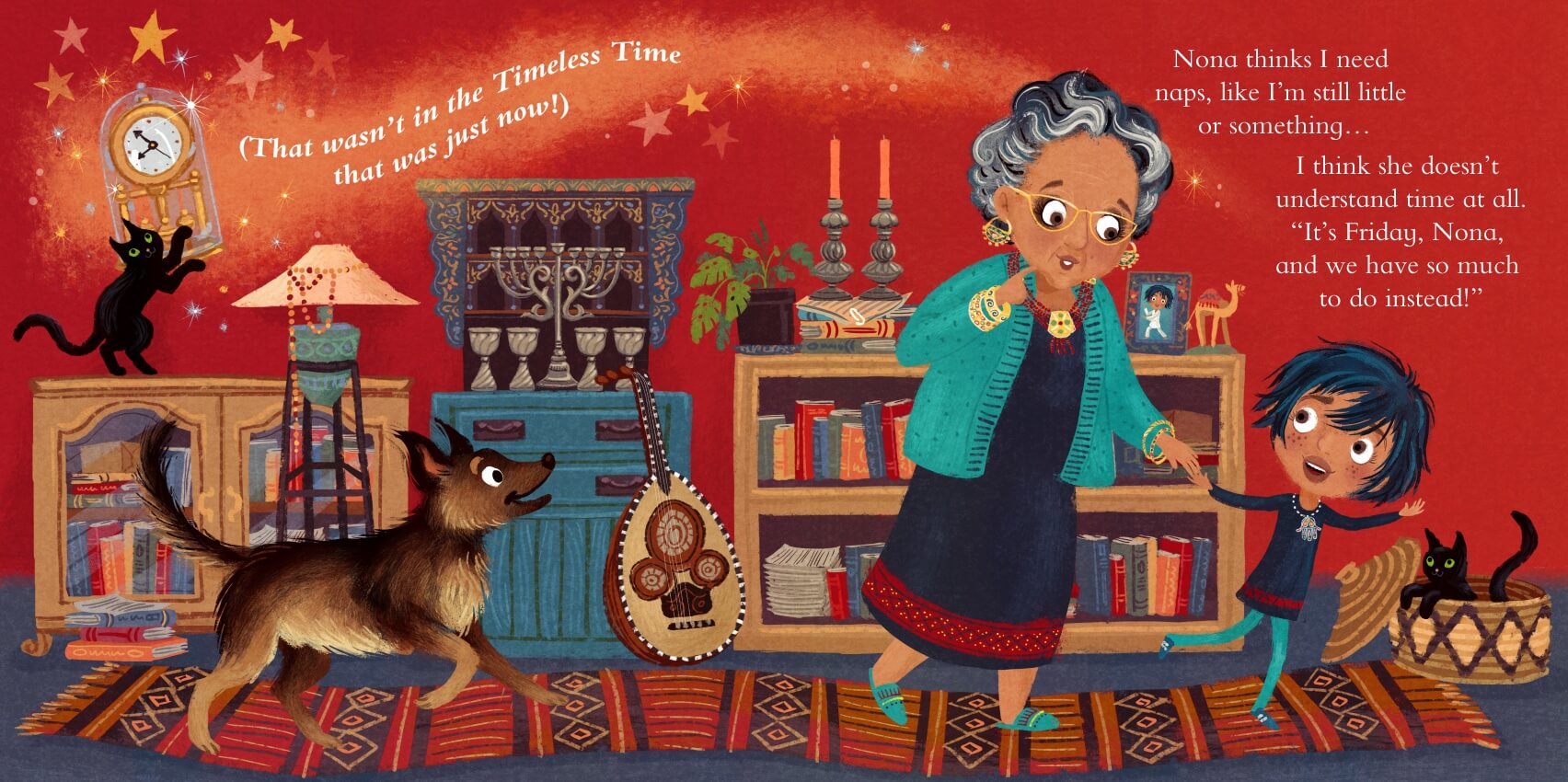
If you’re using print-on-demand services, be aware that they often have restrictions on trim size offerings. Get these details sorted first—it will save you time, money, and headaches down the road.
Setting the Stage: The Pre-Work Conversation
Once you’ve selected an illustrator, don’t jump straight into contracts and deadlines. Start with a conversation.
The Thornes always begin with a Zoom meeting to discuss the project informally. “A nice informal chat gives us a good idea of the ‘feel’ of the book—what the author intended, what kind of visuals best support the story, the overall tone and any specific likes or dislikes,” they explain.
This is your chance to share:
- The emotional heart of your story
- Any specific visual preferences (or pet peeves)
- Color palettes you love or hate
- The overall mood you’re trying to create
During this conversation, you’ll also determine how your team will work together. Will you be partnering with a designer? Who supplies the layout? When does text get finalized? These logistics matter because changes become exponentially more expensive as the project progresses.
“If the author feels it necessary to make any changes to the story, it should happen either at thumbnail or rough stage,” Chantelle and Burgen note—not after the final color art is complete.
Want to learn more about working with professional illustrators? Join us for a free live Q&A where our lead designers will interview Chantelle and Burgen Thorne. They’ll share more insider tips, answer your questions, and help you navigate the illustration process with confidence.
Understanding the Investment: What Will This Cost?
Let’s talk about the question that keeps many authors up at night—pricing.
The truth is, there’s no one-size-fits-all answer. Every project is unique, and professional illustrators assess each one individually, taking into account its complexity, timing, page count, whether the illustrations are in color or black and white, and more.
That said, here are some general work-for-hire guidelines to help you budget.
Single illustrations for chapter books likely range between $300 and $600, while fully illustrated board books or picture books may range from $5,000 to $10,000 or more, depending on the page count and other factors mentioned above.
Remember, work-for-hire means the illustrator receives no royalty percentage from sales. Copyright and licensing rights should be negotiated up front.
Prices vary, based on the illustrator’s experience level and the complexity of your content. An illustrator just starting out will charge less than someone with an extensive portfolio and awards, but you’ll also see the difference in the quality and sophistication of the final product.
The AI Elephant in the Room
With artificial intelligence tools becoming more prevalent, some authors wonder: Can I just use AI for illustrations and save money?
Chantelle and Burgen Thorne have strong feelings about this. “AI art is like fast food—mass-produced, not terribly original, lacking in nutrients and flavor—versus a delicious meal produced by a master chef.”
Beyond the quality concerns, there are deeper issues at play. Current AI tools have been trained on scraped artwork without compensation or permission to the original artists—an ethical minefield. And AI simply can’t replicate the nuanced, emotionally intelligent decisions that human illustrators make. Aside from rights usage concerns, most AI-generated imagery is not made at the proper resolution required for reproduction in print.
“Expecting AI to accurately interpret and represent complex human emotions is also currently outside of its range,” they explain. “While it may know what humor, grief, rage, etc., looks like, it may fail to interpret the scenario or appropriate context correctly. This can make the art feel ‘off’ or stiff—especially to children who are highly alert to visual cues!”
Human illustrators also bring creative flourishes that AI simply can’t conceive of: secondary visual storylines, hidden details for repeat readers to discover, visual metaphors that deepen the narrative, and careful balancing of white space throughout the book. These thoughtful touches are what transform a simple story into a treasured book.
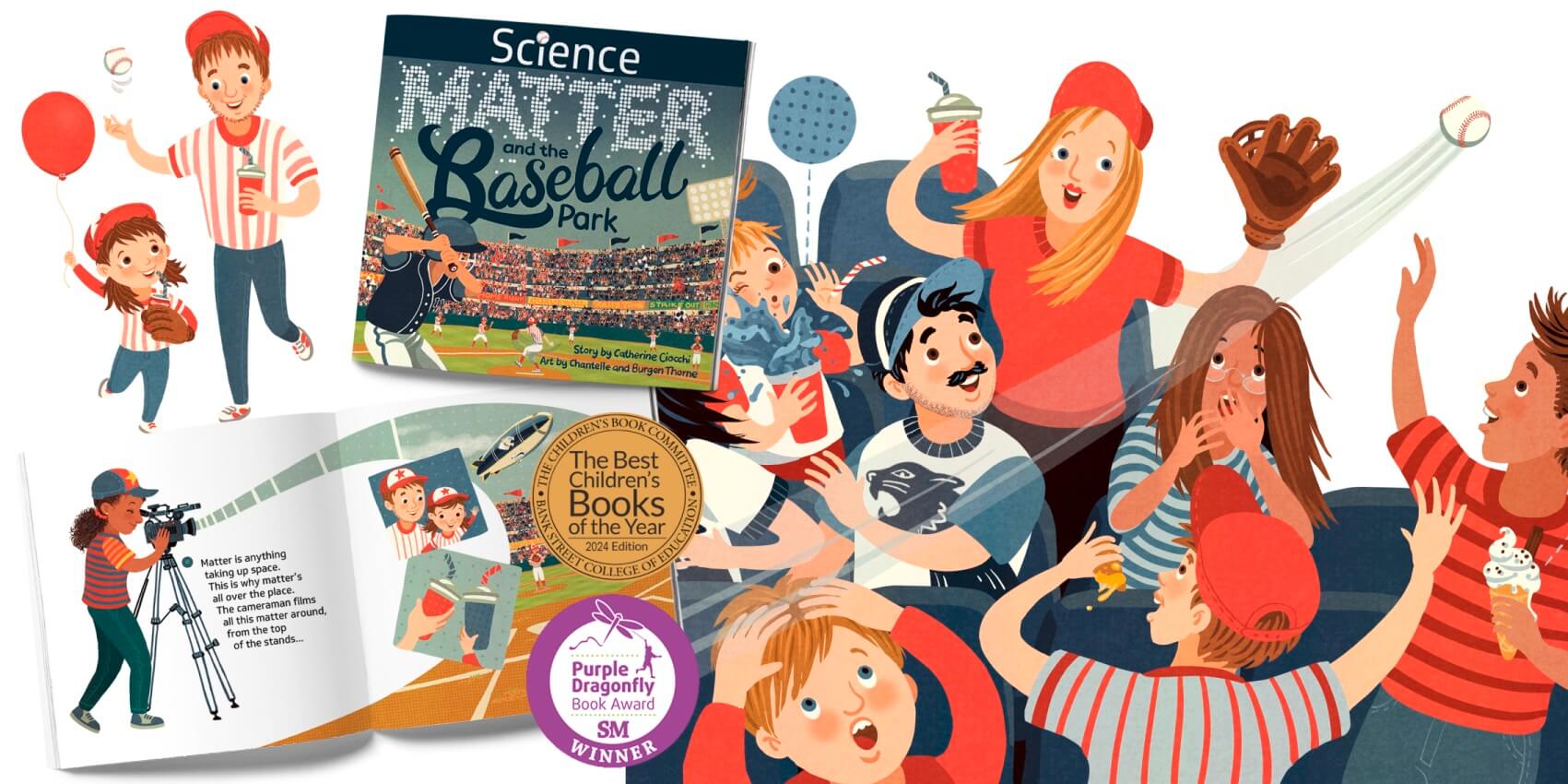
The Partnership Principle: Don’t Go It Alone
Perhaps the most important advice for first-time authors? Don’t go it alone.
“For first-time authors who have never worked on a book before, a publishing partner is not a luxury; it’s a necessity,” the Thornes state firmly. “Even if you’re not a newbie, publishing is a minefield! You need the best help you can get to navigate production, promotion, marketing, and distribution to make your book a success.”
Creating a picture book is a collaborative art form. It requires coordination between the author, illustrator, designer, and publisher. Each brings specialized knowledge to the table—from color theory and composition to printing specifications and distribution channels.
The magic happens when everyone is, quite literally, on the same page.
Ready to Bring Your Story to Life?
Creating an illustrated picture book is a journey—one that requires the right team, clear communication, and careful planning. But when all the pieces come together, there’s nothing quite like holding that finished book in your hands and watching young readers discover the world you’ve created.